

Define the event vibe first
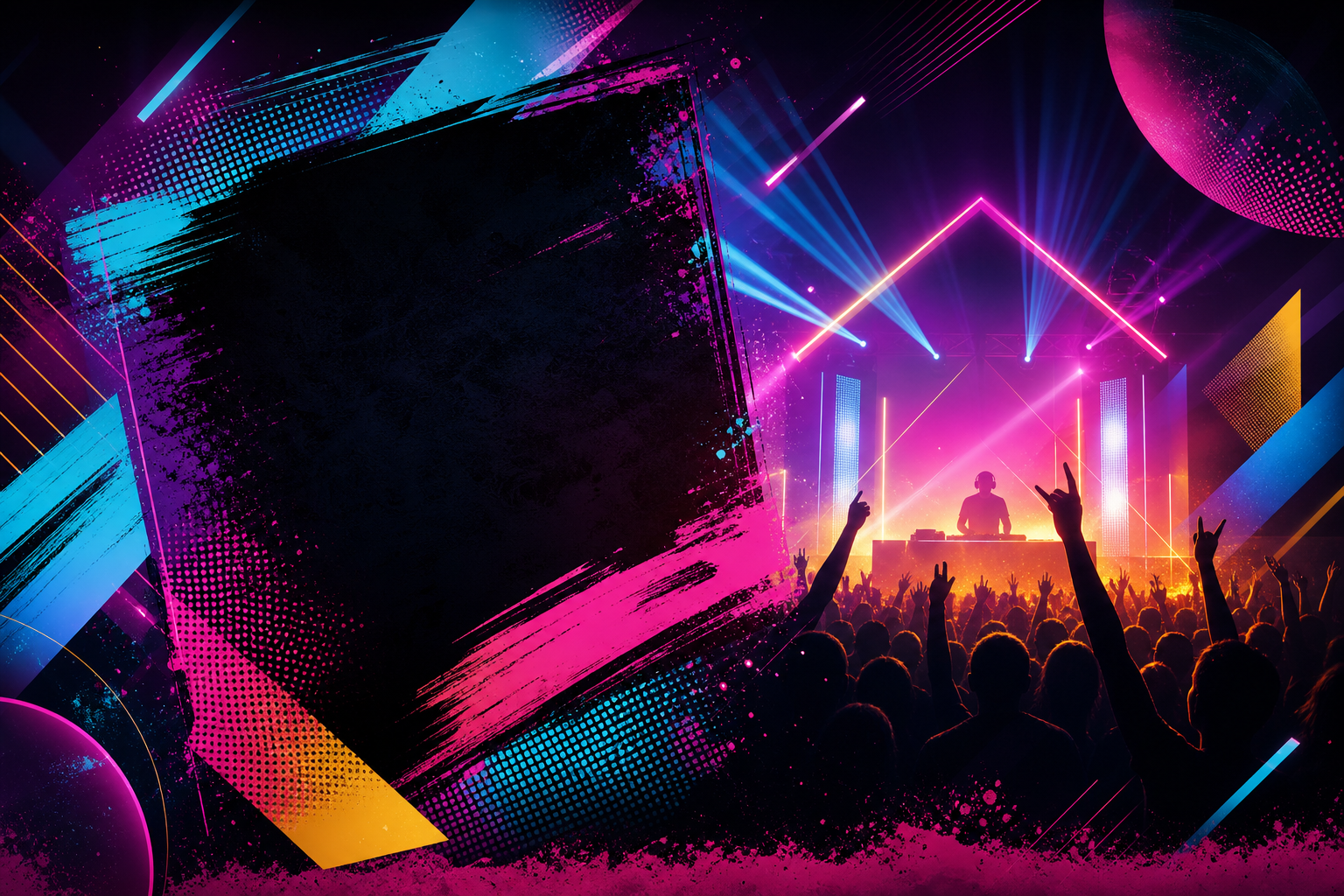
Start with the kind of party: club night, house party, rooftop event, college party, fundraiser, live DJ night, or themed celebration. Then add the visual mood that fits the audience.
A strong party flyer prompt usually includes music style, color palette, lighting, venue mood, and whether the design should feel premium, loud, playful, or underground.
Structure the flyer around the must-know details
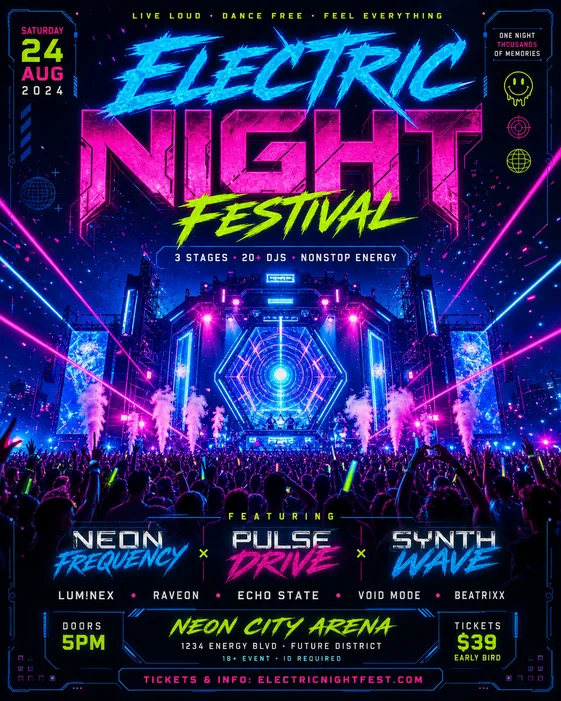
Put the event name first, then date, venue, time, age limit if needed, ticket or RSVP details, and social handle. If everything is equally large, nothing feels important.
Ask for a clear event title area and a separate information block so the design stays readable on mobile.
- Event name
- Date and time
- Venue
- DJ or host
- Ticket or RSVP CTA
- Instagram handle or website
Refine the energy without losing legibility
Party flyers can handle bold type, motion, texture, and high contrast, but the final version still needs readable event information. If the first draft is too busy, ask for fewer background elements and stronger text separation.
Use the AI Flyer Generator to try multiple directions quickly: neon club, retro disco, luxury rooftop, beach party, or minimal black-and-white.
Checklist
- Party type and vibe are named
- Event title, date, time, and venue are readable
- Host, DJ, lineup, or theme does not hide the CTA
- Ticket, RSVP, or social handle is easy to find
- Social version keeps only the details needed to attend
Search intent and format plan
| Decision | What the page should answer | How to brief the generator |
|---|---|---|
| Primary intent | party flyer searches need event vibe, audience, venue, date, host, RSVP, ticket, and social promotion guidance. | Cover party flyer intent with event type, music or theme, required details, format, and one CTA. |
| Format choice | Pick print, feed, story, or square format before styling so the event information stays readable. | Mention letter size for print, 4:5 for main posts, square for profile sharing, or 9:16 for reminder stories. |
| Conversion detail | Make the title, date, venue, ticket or RSVP path, and social handle clearer than visual texture. | Use the party flyer maker, club flyer maker, or concert flyer maker when the brief needs a more specific example set. |
Best workflow
Start how to make a party flyer with a short brief: event type, audience, required text, format, and CTA. Generate one visual direction first, then revise for readability before changing style.
Best for
- Searchers who need a practical flyer structure quickly
- Teams that need both printable and social versions
- Related paths such as party flyer maker, club flyer maker, concert flyer maker
Less ideal for
- Long-form brochures with multiple sections
- Designs where every detail must be manually positioned before generation
- Campaigns that have not chosen one primary CTA
Reusable examples
Party flyer prompt
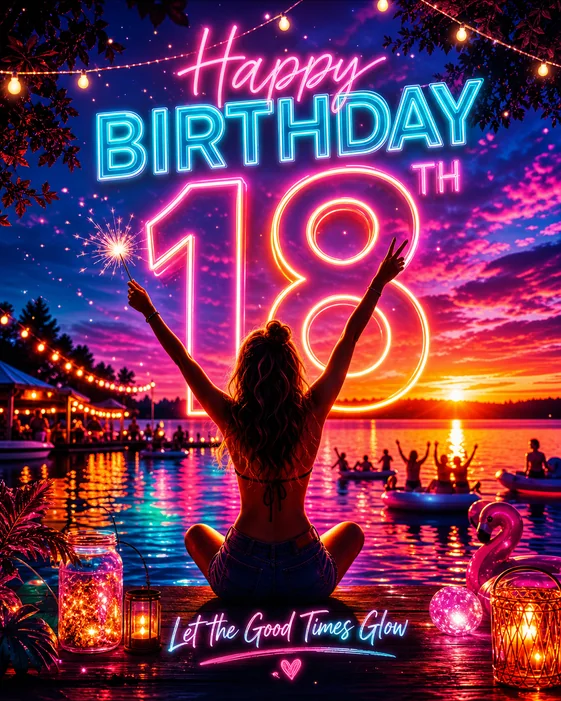
Use this for club nights, house parties, themed events, birthday parties, and host-led social promotion.
Create a bold party flyer for a neon rooftop night. Include event title, date, time, venue, DJ name, host, ticket link, Instagram handle, energetic nightlife style, readable info block, and 4:5 social format.
Frequently asked questions
Who is this guide for?
A party flyer has one job: make people understand the vibe fast enough to want the details. The design should sell the event before it explains everything.
What workflow does this guide support?
This guide is designed to help with how to make a party flyer and connects to the matching Vismuse workflow page for hands-on execution.
Do I need design experience to use this workflow?
No. Start with the guide structure, add the details you already know, and use the matching Vismuse generator to create and refine the visual.